

Commercial Mold Remediation in London, OH
London's humid continental climate sustains elevated moisture levels throughout spring, summer, and fall, creating persistent conditions that favor mold colonization in basements and crawl spaces common to older Midwest properties. Commercial Mold Remediation in London, OH addresses the moisture intrusion and indoor air quality concerns that develop when these foundation areas trap groundwater and humidity without proper remediation. Norbert Mold Remediation connects London property owners with independent local providers who assess moisture sources, contain affected zones, and execute removal work to restore healthier building environments.
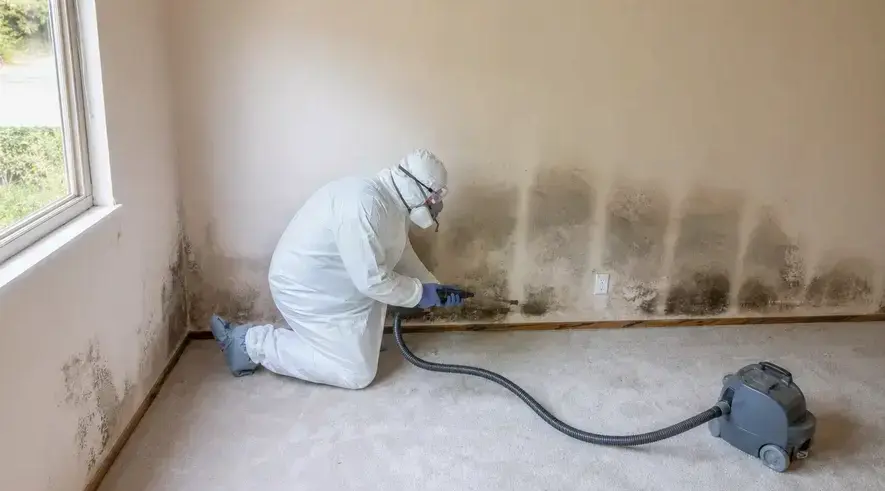
What gets cleaned in a commercial building, and what comes out
The honest answer to “does this come out, or can it be cleaned?” turns on two things — what the material is, and how many square feet are affected. Those are the two axes of the EPA’s own remediation table, reproduced below for the materials usually found in a commercial building.
| Material | Under 10 sq ftabout a cabinet door, or one ceiling tile | 10 to 100 sq ftroughly one wall, or a small bathroom | Over 100 sq ftmore than one room's worth of surface |
|---|---|---|---|
| Carpet and backingbroadloom or tile carpet and its backingEPA, Table 2 | Wet vacuumHEPA vacuum | Wet vacuumHEPA vacuumRemove and discard | Wet vacuumHEPA vacuumRemove and discard |
| Wallboardpartition walls and demountable panelsEPA, Table 2 | HEPA vacuum | HEPA vacuumRemove and discard | HEPA vacuumRemove and discard |
| Non-porous, hard surfacessealed floors, metal fixtures and glazingEPA, Table 2 | Wet vacuumDamp wipeHEPA vacuum | Wet vacuumDamp wipeHEPA vacuum | Wet vacuumDamp wipeHEPA vacuum |
| Concrete or cinder blockslabs, cores and block wallsEPA, Table 2 | Wet vacuumHEPA vacuum | Wet vacuumHEPA vacuum | Wet vacuumHEPA vacuum |
| Books and papersstored files, stock and cardboardEPA, Table 2 | HEPA vacuum | HEPA vacuum | HEPA vacuum |
What those methods mean, in EPA's words
- Wet vacuum
Wet vacuums are vacuum cleaners designed to collect water. They can be used to remove water from floors, carpets and hard surfaces where water has accumulated.
EPA, cleanup methods- Damp wipe
Mold can generally be removed from nonporous (hard) surfaces by wiping or scrubbing with water, or water and detergent.
EPA, cleanup methods- HEPA vacuum
HEPA (High-Efficiency Particulate Air) vacuums are recommended for final cleanup of remediation areas after materials have been thoroughly dried and contaminated materials removed.
EPA, cleanup methods- Remove and discard
Building materials and furnishings that are contaminated with mold growth and are not salvageable should be double-bagged using 6-mil polyethylene sheeting.
EPA, cleanup methods
Removed and replaced, whatever the area
- Ceiling tiles — drop-ceiling tiles and grid infill.
Discard and replace.
EPA, Table 1This is the action EPA's water-damage table gives for ceiling tiles. It is the one material here with no size threshold to weigh.
These guidelines are for damage caused by clean water. If you know or suspect that the water source is contaminated with sewage, or chemical or biological pollutants, then Personal Protective Equipment and containment are required by OSHA.
EPA, Table 1Porous materials that are wet and have mold growing on them may have to be discarded.
EPA, cleanup methodsMold can grow on wood, drywall, carpet and furniture if they remain wet for more than 24 hours.
EPA, flood cleanup
Commercial interiors add two materials that rarely survive — drop-ceiling tile and tile carpet — and both are usually cheaper to replace than to clean around. Sealed floors, glazing and structural concrete stay. Stock, files and cardboard are judged as paper, which EPA treats as a HEPA-vacuum item at every size rather than a removal.
37.2% of homes in London predate 1960. Older construction hides more of its plumbing and framing behind finished surfaces, which is why what shows on the wall is usually smaller than what is behind it.Source: US Census Bureau, American Community Survey 2023 5-year estimates, table B25034 — London city (4,749 housing units)
Commercial Mold Remediation Services for London, OH
Businesses and property owners across London face persistent moisture challenges that create favorable conditions for indoor mold growth. Central Ohio's humid subtropical climate brings consistently elevated moisture levels throughout spring, summer, and fall, and many commercial buildings in the area—particularly those with basements or crawl spaces built using older Midwest construction methods—are especially vulnerable to trapped moisture accumulating in below-grade spaces. When moisture persists in these environments, mold can develop rapidly, affecting air quality, structural integrity, and the health and safety of occupants. Commercial properties are particularly at risk because they often house more people in enclosed spaces and may go unmonitored for longer periods, allowing mold colonies to expand undetected.
Norbert Mold Remediation connects London property owners with independent local providers who specialize in thorough commercial mold inspection and remediation. These professionals begin with a comprehensive assessment to identify the full extent of mold presence and the moisture sources driving it, then execute targeted removal and containment strategies designed to address the problem safely and completely. Follow-up monitoring and moisture management guidance help prevent recurrence, protecting your building's interior environment and the people who work or visit there. If you suspect mold in your commercial space, connecting with a local remediation provider through Norbert ensures a fast, professional response tailored to London's specific moisture conditions.
Why London Property Owners Choose Norbert Mold Remediation
Commercial Mold Remediation Expertise
Commercial Mold Remediation requires specialized knowledge of building systems, occupancy codes, and business continuity. Norbert connects you with independent providers experienced in thorough Commercial Mold Remediation across commercial properties.
Rapid Commercial Mold Remediation Response
Commercial Mold Remediation delays disrupt operations and risk indoor air quality. Norbert's local network enables fast connection to providers ready to begin Commercial Mold Remediation assessment and containment promptly.
Clear Commercial Mold Remediation Communication
Commercial Mold Remediation decisions demand transparent information. Independent providers in Norbert's network explain findings, containment steps, and Commercial Mold Remediation scope clearly so you understand each phase.
Humidity & Moisture Year-Round
Central Ohio's persistent humidity throughout spring, summer, and fall creates conditions where moisture accumulates in commercial spaces—particularly in older buildings with basements or crawl spaces. Commercial Mold Remediation addresses moisture that settles in these areas continuously, not just after isolated events.
How Our Commercial Mold Remediation Process Works
Schedule Your Commercial Mold Assessment
Contact Norbert Mold Remediation to request an inspection of your London property. A local provider will arrange a time to visit your commercial space and identify any active mold growth, moisture sources, or structural areas where mold commonly takes hold.
Receive Detailed Commercial Mold Findings
The local provider conducts a thorough inspection, paying close attention to areas where moisture accumulates—particularly basements and crawl spaces common in older Midwest buildings, where humidity levels favor ongoing mold development. You'll receive a clear assessment and removal plan tailored to your property's specific needs.
Complete Commercial Mold Removal & Restoration
The local remediation provider executes targeted commercial mold removal using containment and safe extraction methods to protect your indoor air quality. Follow-up monitoring ensures affected areas dry properly and mold conditions are resolved.
Dealing with Commercial Mold Remediation in London? Get fast, professional help.
Call Now — (740) 224-8854Commercial Mold Remediation Across London
London's location in central Ohio's humid continental climate creates persistent moisture conditions throughout spring, summer, and fall—not just during heavy rainfall events. This extended period of high relative humidity poses a particular challenge for commercial properties, where large interior spaces, HVAC systems, and varying occupancy patterns can mask developing moisture problems. Older buildings typical of the region often feature basements or crawl spaces that naturally collect ground moisture, and these below-grade areas require vigilant monitoring and targeted remediation strategies to prevent mold colonization that can spread upward into occupied commercial zones.
When mold takes hold in a commercial property, the risks extend beyond structural concerns to indoor air quality and occupant health. Effective Commercial Mold Remediation in London requires providers who understand how the area's climate patterns interact with building design and can implement containment, removal, and prevention measures suited to local conditions. Norbert Mold Remediation connects London property owners with independent local remediation specialists equipped to assess moisture sources, remove affected materials safely, and help restore a healthier indoor environment for tenants and employees.
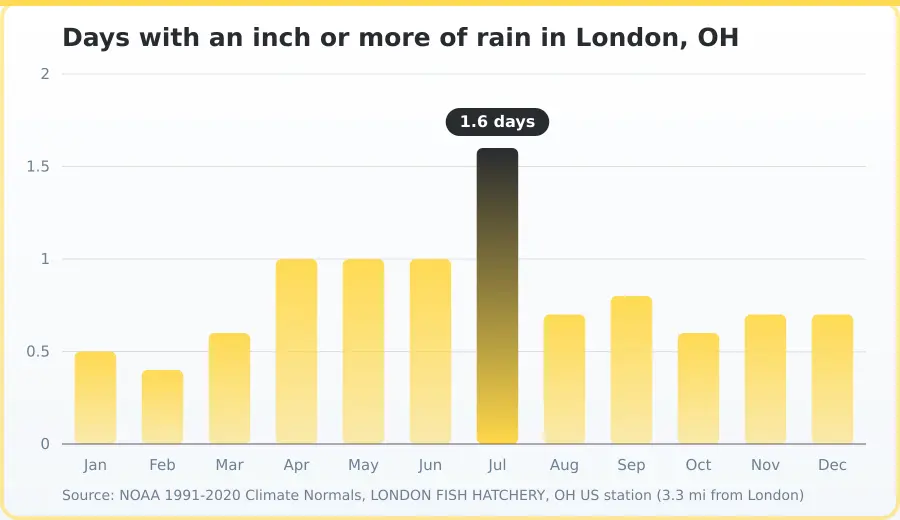
| Period | Days with an inch or more of rain (days) |
|---|---|
| Jan | 0.5 |
| Feb | 0.4 |
| Mar | 0.6 |
| Apr | 1 |
| May | 1 |
| Jun | 1 |
| Jul | 1.6 |
| Aug | 0.7 |
| Sep | 0.8 |
| Oct | 0.6 |
| Nov | 0.7 |
| Dec | 0.7 |
Source: NOAA 1991-2020 Climate Normals, LONDON FISH HATCHERY, OH US station (3.3 mi from London). Retrieved October 5, 2026.
Commercial Mold Remediation Across London's Seasons
Spring: Rising Moisture Risk
Spring thaw and increased rainfall create elevated moisture conditions that accelerate mold colonization in commercial spaces. Property owners often discover active growth in basements, crawl spaces, and foundation areas as humidity levels climb. Norbert Mold Remediation connects you with local providers who assess moisture sources and containment needs before conditions worsen.
Summer: Growth and Visibility
Warm temperatures and sustained humidity during summer months fuel rapid mold expansion in commercial buildings. Indoor air quality concerns become more pronounced as spore counts rise and occupants report respiratory symptoms. Local remediation providers accessible through Norbert focus on thorough removal and moisture control to restore safe working environments.
Fall: Persistent Basement Challenges
Central Ohio's humid continental climate maintains high relative humidity well into fall, keeping moisture-prone areas in commercial properties vulnerable to ongoing mold development. Many buildings in the region feature basements or crawl spaces typical of older Midwest construction—spaces where moisture naturally accumulates and mold thrives year-round. Norbert Mold Remediation helps property owners connect with local providers who understand these structural vulnerabilities and design remediation strategies tailored to persistent indoor moisture conditions.
Winter: Cold-Related Condensation
Winter temperature swings between heated interiors and cold exterior walls create condensation that feeds mold growth in commercial spaces, especially in poorly insulated areas. Property owners may notice increased activity in walls, window frames, and mechanical rooms. Norbert Mold Remediation links you with independent local providers experienced in identifying and addressing winter moisture sources before spring arrival.
Related Services
Commercial Mold Remediation FAQs — London, OH
Commercial mold remediation typically includes inspection to locate mold growth, containment of affected areas to prevent spore spread, removal of contaminated materials, thorough cleaning and treatment of surfaces, and restoration of damaged areas. The independent providers Norbert connects you to will assess the scope and recommend the appropriate steps to safely remove mold and restore indoor air quality in your business space.
Norbert works to connect London property owners with local independent remediation providers quickly so you can address mold issues without delay. Response times depend on provider availability and your business's schedule, but the goal is to get a qualified local provider in touch with you promptly to assess the situation and discuss next steps.
Cost depends on the extent of mold growth, the size and location of affected areas, materials involved, whether structural components need removal or replacement, and the complexity of containment required. Each independent provider sets their own pricing based on the specific situation found during inspection. Getting multiple assessments helps you understand the range of options.
Before remediation begins, the provider will advise on securing the work area, moving or protecting business contents, and ensuring adequate ventilation. You may need to temporarily relocate staff or customers depending on the scope. The independent provider will give you detailed guidance on access requirements and any precautions needed to keep your business operating safely during the process.
After remediation, controlling moisture is key to preventing recurrence. This includes fixing leaks promptly, ensuring proper drainage around your building, maintaining adequate ventilation, and monitoring humidity levels. The provider can recommend specific steps for your space. Regular inspections and swift action on water intrusion help keep mold from establishing again in your commercial property.
Central Ohio experiences sustained high humidity throughout spring, summer, and fall, creating ongoing moisture conditions indoors. Basements and crawl spaces common in older local buildings often trap this moisture, making them prone to mold growth year-round. Commercial mold remediation removes existing growth and addresses moisture sources so your business maintains a healthy indoor environment despite the region's persistent humidity patterns.
Homeowner Safety Toolkit
Verify Your London, OH Mold Remediation Company
Before you hire anyone, use these independent national resources to confirm credentials, standards, and track record.
EPA
The federal government's own guidance on identifying, cleaning up, and preventing mold growth in a home.
Mold Prevention GuideACAC
An independently accredited certifying body for mold inspectors and consultants — one of the few in this field whose standards are verified by an outside accreditation board, not just self-declared.
Find a Certified InspectorIICRC
Publishes the S520 standard for professional mold remediation. Confirm a company's technicians hold real, current IICRC certification before you hire them.
Verify CertificationDealing with Commercial Mold Remediation in London, OH? Call (740) 224-8854 for 24/7 help.
Call Now — (740) 224-8854Areas We Serve in London, Ohio
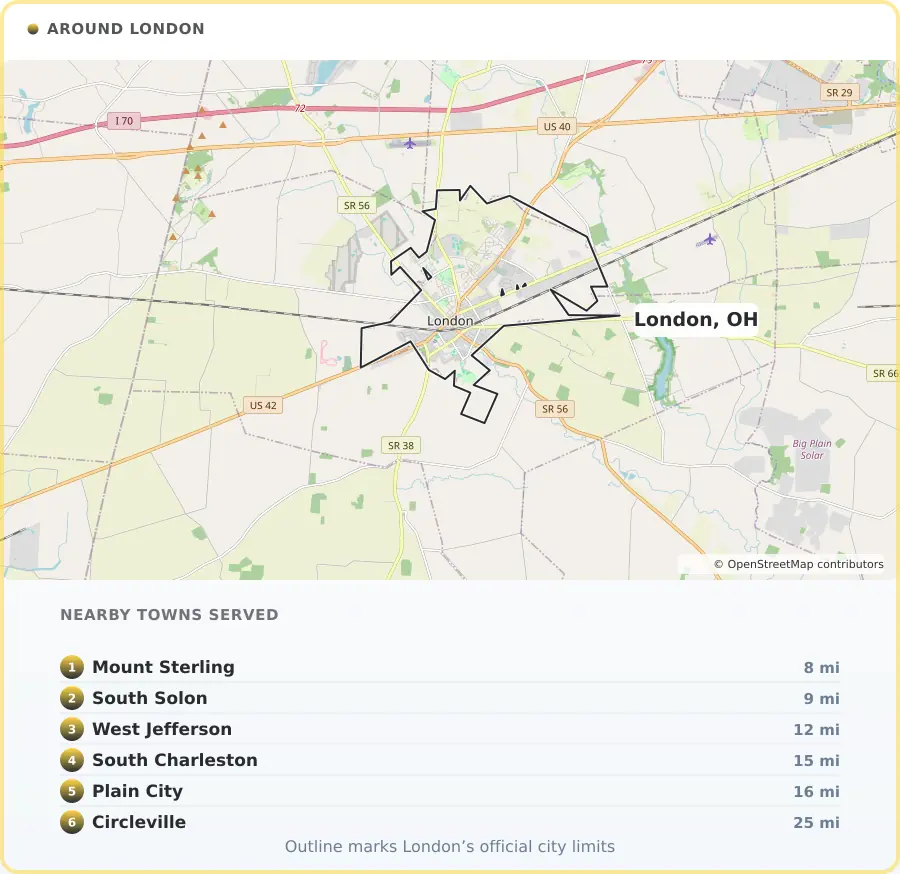
Serving London, OH and 6 communities around it. Local knowledge of how each area is built shapes how the work is handled there.
London, OH Information
London, Ohio is the county seat of Madison County, a community of roughly 10,500 people set amid the broad, fertile farmland of west-central Ohio. That agricultural foundation still shapes daily life here, supporting operations like Trillium Farm Holdings alongside steady work from the Madison Correctional Institution and a major Walmart distribution center. It's a town built on practical industries — logistics, corrections, and county government — rather than passing trends.
Beyond the warehouses and fields, London keeps its small-city rhythm through places like Madison Health and London City Schools, with retail and banking anchors such as Speedway and Park National Bank rounding things out. It's a place where neighbors know the courthouse square and the harvest season still carries real weight.
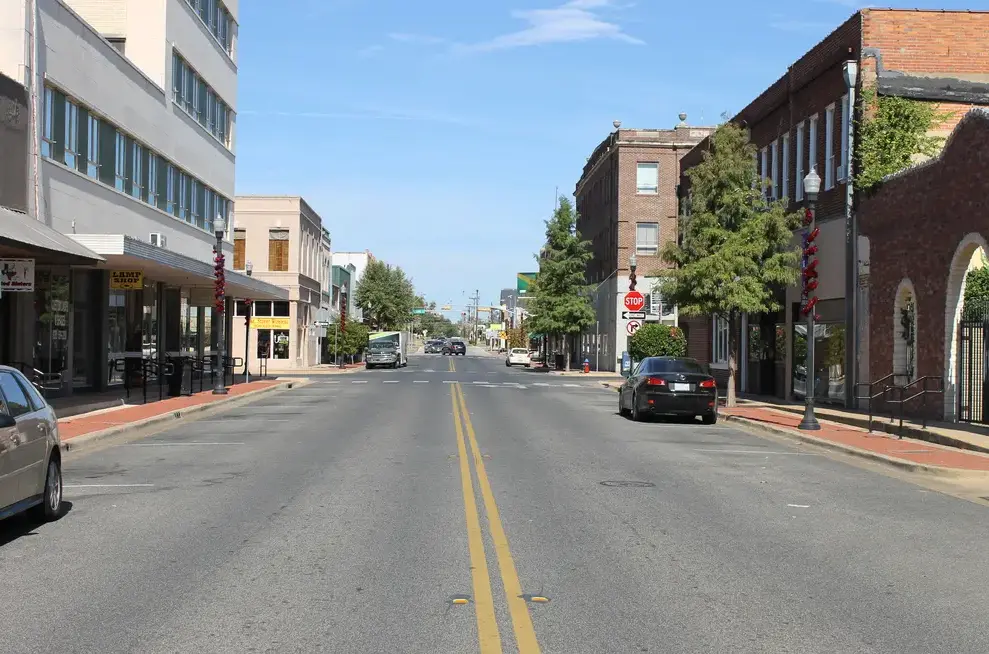
Photo: Billy Hathorn, CC BY-SA 3.0